

The modern workplace in Singapore is characterised by its fast-paced and demanding environment, with employees constantly juggling deadlines, high workloads, and ever-evolving expectations. This constant pressure at work can take a toll on mental health, leading to stress, burnout, and even more serious conditions like anxiety and depression.
Indeed, promoting mental health and wellness in the workplace is no longer just a “nice to have,” but a critical business and social imperative. This article explores everything you need to know about mental health in the workplace, from its importance and benefits to practical strategies for improvement.
Importance of Promoting Mental Health in the Workplace
According to a recent Ministry of Health (MOH) survey conducted in 2022, a staggering 17% of Singapore’s population has experienced poor mental health, up from 13.4% in 2020. This significant increase in just two years underscores the urgent need for greater attention to mental health and wellbeing.
This is particularly critical in the workplace, which plays a crucial role in shaping individuals’ mental wellness. Long hours, high-pressure environments, and constant demands can contribute to stress, anxiety, and burnout. When left unaddressed, these issues can have a detrimental impact on employees’ productivity, job satisfaction, and overall quality of life.
Conversely, when mental health in the workplace is actively supported, the benefits can be profound for both individual employees and the business as a whole.
Benefits of a Mentally Healthy Workforce
1. Enhanced Productivity
Studies suggest that a mentally healthy workforce is a more productive one. Employees who experience better mental well-being are more focused, engaged, and able to perform at their optimal level. They are also less likely to miss work due to mental health concerns, reducing absenteeism and increasing overall productivity.
2. Increased Creativity
A mentally healthy workforce also tends to be more creative and innovative. Employees who are not bogged down by stress and mental health issues are more likely to contribute new ideas and solutions. A supportive workplace facilitates creative thinking and problem-solving, giving the company a competitive edge.
3. Reduced Turnover Rates
When employees feel supported and their mental health is prioritised, they are more likely to be satisfied with their jobs and committed to the company. This develops a sense of loyalty and belonging, leading to lower turnover rates. Reducing employee turnover allows companies to minimise operational disruption, save on recruitment and onboarding costs, and maintain a stable and experienced workforce.
Ultimately, a mentally healthy workplace is one where employees can thrive. Businesses that provide robust support for their employees’ mental well-being can also reap the benefits of a motivated, engaged, and productive workforce that drives overall success.
How to Improve Mental Health in the Workplace
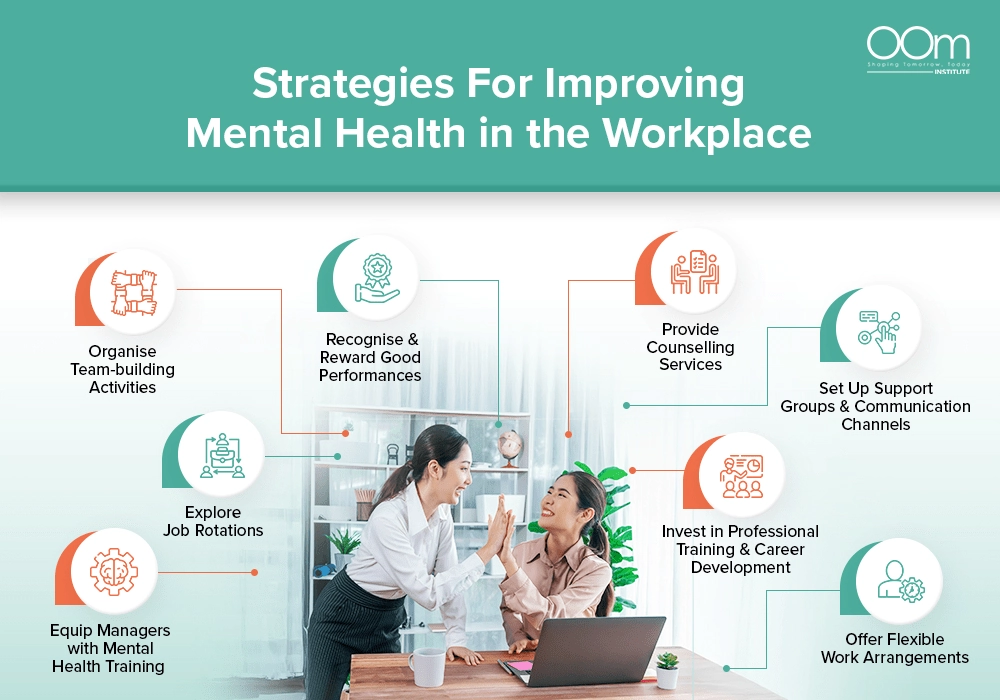
Now that we have recognised its importance, here are some strategies that businesses can adopt to promote mental health and well-being in the workplace.
1. Equip Managers with Mental Health Training
As direct supervisors and mentors, managers play a pivotal role in influencing their employees’ mental wellness. Equipping them with training on recognising key signs and mental health concerns allows them to become more attuned to their team’s needs and provide timely assistance. Additionally, a well-trained manager can foster open communication, reduce stigma around mental health issues, and create a workplace culture where employees feel safe seeking help when needed.
2. Recognise and Reward Good Performances
Recognising and rewarding good performances is a simple yet powerful way to boost employee morale and promote mental health in the workplace. Regularly acknowledging employees’ hard work and achievements through verbal affirmations, bonuses, or public recognition helps them feel valued and appreciated. This, in turn, enhances their sense of self-worth and motivation, ultimately contributing to a happier, more engaged workforce.
3. Explore Job Rotations
Job rotations can be highly beneficial for preventing monotony and reducing the risk of burnout. As employees rotate between different roles, they can develop new skills, gain fresh perspectives, and stay engaged with their work. Moreover, job rotations expose employees to varied responsibilities that stimulate and motivate them. This can help employees discover new strengths and interests, giving them a renewed sense of purpose.
4. Organise Team-building Activities
Team-building activities are a great way to build stronger relationships among colleagues, promote collaboration, and create a sense of belonging. Regularly organising workshops, retreats, and informal gatherings provides a much-needed break from daily work routines. More importantly, these activities encourage communication and camaraderie, enabling employees to form a strong support network that helps them cope with work-related anxiety and challenges.
5. Provide Counselling Services
Offering employee assistance programmes (EAPs) or access to mental health professionals as part of medical is a crucial step in supporting mental health at work. Professional counselling offers a safe and confidential space to manage stress, seek help, and address mental health concerns before they escalate. This proactive approach can help prevent burnout, improve job performance, and create a more positive workplace culture where mental health is treated with the importance it deserves.
6. Offer Flexible Work Arrangements
Help your employees achieve a better work-life balance by offering flexible work arrangements, such as remote work options, compressed workweeks, or flexible start and finish times. This flexibility is particularly beneficial for those who may be dealing with personal challenges or family commitments, as it allows them to tailor their work around their individual needs. With the autonomy to manage their schedules, employees experience less work-related stress and increase job satisfaction.
7. Set Up Support Groups & Communication Channels
Creating safe spaces for open communication is crucial for promoting mental health in the workplace. This can involve setting up employee support groups or establishing regular communication channels where employees feel comfortable sharing their experiences and seeking advice. These groups can help cultivate a sense of community, reduce feelings of isolation, and provide emotional support to other employees facing similar challenges.
8. Invest in Professional Training and Career Development
Investing in professional training and career development opportunities shows employees that their growth is valued, becoming a source of motivation. When employees feel that they are progressing in their careers and acquiring new skills, they also gain a sense of purpose and direction that diminishes feelings of stagnation. Furthermore, providing continuous learning opportunities also helps employees stay engaged and motivated, as they are constantly challenged to grow.
Fostering Long-Term Fulfilment With OOm Institute
While building a mentally healthy workplace is not an overnight process, the benefits are well worth the effort. Through a thoughtful, proactive, and multi-faceted approach, you can create a supportive environment that improves staff mental health and wellbeing while driving results.
For organisations looking to implement these strategies effectively, let OOm Institute become your trusted partner. With our WSQ course on mental health and well-being in the workplace, you can equip your staff with the skills and knowledge needed to build a healthier and happier workplace. Not only that—corporations will be eligible for course fee subsidies of up to 70%, helping you make a cost-effective investment for workplace wellness.